.svg)


Time Travel at Uppåkra
Här kan du ladda ner spelfilen till Time Travel at Uppåkra för att kunna spela hemma! Den här versionen är baserad på Minecraft: Bedrock Edition och är gjord för att spelas lokalt (offline). Den är anpassad för en specifik upplevelse och innehåller inga online- eller multiplayerfunktioner.
Var kan man spela?
Var kan man spela?
- Windows 10 och 11 (PC)
Vad krävs för att spela?
Spelfilen är gratis, men du behöver:
Spelfilen är gratis, men du behöver:
- Minecraft: Bedrock Edition för Windows
Laddas ner från Microsoft Store:
https://www.microsoft.com/store/apps/9NBLGGH2JHXJ - Kostnad för Minecraft Bedrock Edition:
Cirka 300–350 SEK (engångsköp, pris kan variera) - Internetanslutning (endast för nedladdning)
Framåt
I framtiden kommer Time Travel at Uppåkra även att kunna laddas ner via Minecraft Marketplace.
Då kommer versionen att finnas tillgänglig på:
I framtiden kommer Time Travel at Uppåkra även att kunna laddas ner via Minecraft Marketplace.
Då kommer versionen att finnas tillgänglig på:
- Mobil (iOS / Android)
- Xbox
- Playstation
- Nintendo Switch
Meet the Uppåkra Archaeologists
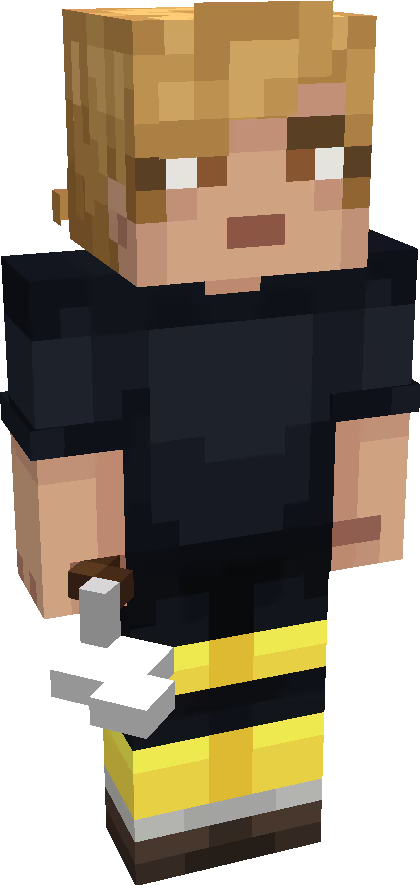
NPC: Sofia Winge
Hello! My name is Sofia Winge, and I work as an archaeologist for the Uppåkra Foundation. Did you know that beneath the fields of Uppåkra lie the remains of one of the largest Iron Age settlements in Northern Europe? Help us excavate this great settlement in the Minecraft world, and join a time travel adventure to uncover the mysteries of Uppåkra’s finds! With every artifact you discover, you will learn more and more about Uppåkra’s history. You will also learn about the different methods and interdisciplinary subjects that archaeologists use to gain knowledge. Oh, and by the way, feel free to check here if you want to meet me and my colleagues here, we exist in the real world too!
Grej of the day
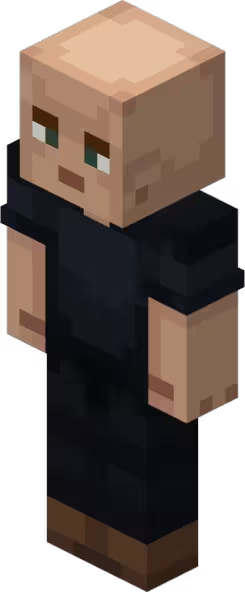
NPC: Micke Hermansson
Hello! My name is Micke Hermansson. When I worked as a teacher, I came up with a model with super short lessons that was named “Thing (Grej in Swedish) of the day” or GOTD.
My super short lessons have become super popular. Maybe you have already tried it together with your teacher? GOTD is about trying to figure out the answer to tricky clues, and then learn something about the answers in very short and fun lessons.
Are you ready for some clues? In the game, I will give you the answers and some fun facts!
“Can be super soft, but also the hardest of them all”
“Air-filled fruit that can float”
“Swedes orbiting the Earth”
My super short lessons have become super popular. Maybe you have already tried it together with your teacher? GOTD is about trying to figure out the answer to tricky clues, and then learn something about the answers in very short and fun lessons.
Are you ready for some clues? In the game, I will give you the answers and some fun facts!
“Can be super soft, but also the hardest of them all”
“Air-filled fruit that can float”
“Swedes orbiting the Earth”
Ines Tooth Mystery Quest
In the Tooth Mystery Quest, you will learn about a very special find made in our Archaeology school by Ines Roos Bengtsson at Nyvångskolan I Dalby, Sweden. Take a look at this film and learn about her archaeological discovery.
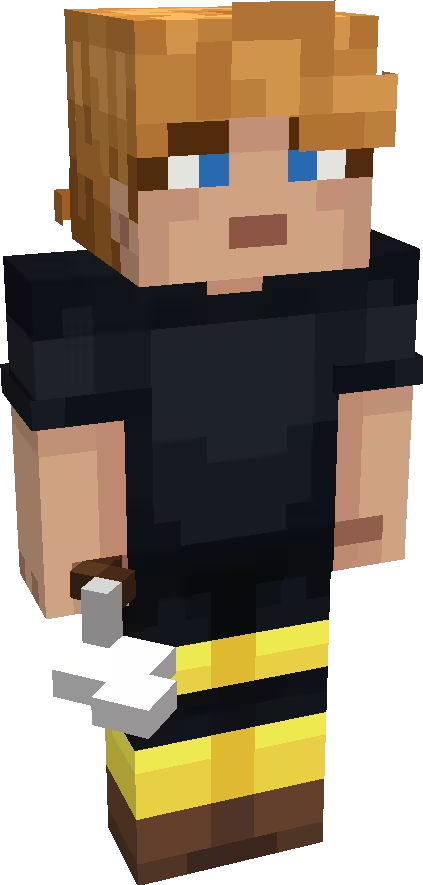
NPC: Linda Spanier
Meet the astronaut Christer Fuglesang
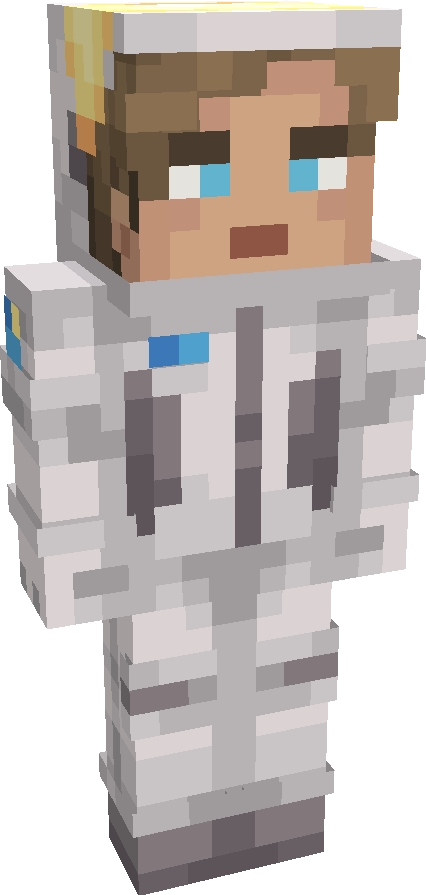
NPC: Christer Fuglesang
Hello! My name is Christer Fuglesang, and I am one of the members of Uppåkra’s Scientific Advisory Board. I am also a professor of space science – and an astronaut. In 2006, I became the first Swede in space.
I am also one of the characters in this game, where I talk about astronomy and what people during the Iron Age believed about the moon, the sun, and the stars.
Feel free to come and visit me in the game! Hej! Mitt namn är Christer Fuglesang, och jag är en av medlemmarna i Uppåkras vetenskapliga råd. Jag är även professor i rymdfart men även astronaut. 2006 blev jag den första svensken i rymden. Jag är också en av karaktärerna i det här spelet, där jag berättar om astronomi och vad människorna under järnåldern trodde om månen, solen och stjärnorna. Hälsa gärna på mig i spelet!
I am also one of the characters in this game, where I talk about astronomy and what people during the Iron Age believed about the moon, the sun, and the stars.
Feel free to come and visit me in the game! Hej! Mitt namn är Christer Fuglesang, och jag är en av medlemmarna i Uppåkras vetenskapliga råd. Jag är även professor i rymdfart men även astronaut. 2006 blev jag den första svensken i rymden. Jag är också en av karaktärerna i det här spelet, där jag berättar om astronomi och vad människorna under järnåldern trodde om månen, solen och stjärnorna. Hälsa gärna på mig i spelet!
Competition!
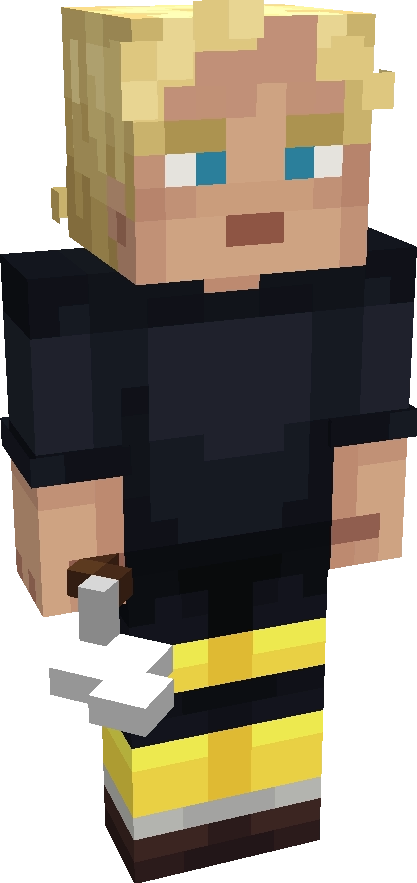
NPC: Håkan Aspeborg
Hello! I am Håkan Aspeborg and I am leading the excavations at Uppåkra together with a team of archaeologists from Lund University.
In 2022, the largest research excavations in Sweden to this day started at Uppåkra. Generations of so called Great Halls, wooden palaces that were once the homes of the rulers of Uppåkra , are being excavated. Many more answers to the secrets of Uppåkra will be revealed, and the history will be rewritten in the years to come. In this game, one of the missions is to rebuild the Great Hall.
Join the quest and start working with the latest results and finds from the excavations in order to create your interpretation of the building. You may also participate in a contest. The interpretation closest to the results of the excavations will win the contest!
You can send in your contribution to sofia.winge@uppakra.se, taking a screenshot of your reconstruction. Don’t forget to hand in documentation on your choice of materials and interpretations. In 2027 we will announce the winner!
Read more below about the Great Hall quest.
In 2022, the largest research excavations in Sweden to this day started at Uppåkra. Generations of so called Great Halls, wooden palaces that were once the homes of the rulers of Uppåkra , are being excavated. Many more answers to the secrets of Uppåkra will be revealed, and the history will be rewritten in the years to come. In this game, one of the missions is to rebuild the Great Hall.
Join the quest and start working with the latest results and finds from the excavations in order to create your interpretation of the building. You may also participate in a contest. The interpretation closest to the results of the excavations will win the contest!
You can send in your contribution to sofia.winge@uppakra.se, taking a screenshot of your reconstruction. Don’t forget to hand in documentation on your choice of materials and interpretations. In 2027 we will announce the winner!
Read more below about the Great Hall quest.
Facts about the Great Hall
The area where generations of Great Hall buildings once stood, have previously been open for excavations.
Many buildings have been built in the same area during the Iron age.
The building from 500 A.D period is one of the best preserved. This is the one that we also have chosen for the game from Quest 4, the Murder Mystery!
What did they use as building material?
The buildings during the Iron Age in Scandinavia were built of so-called organic building material, such as for example wood and straw. These materials are rarely preserved to our days.
It is also important to remember that only a fraction of the objects in ancient times have been preserved to the present. Objects made of organic matter such as wood and textiles quickly break down in the soil. We therefore need to imagine tools, furniture, clothes and much more to get a better picture of Uppåkra during the Iron Age.
Many buildings have been built in the same area during the Iron age.
The building from 500 A.D period is one of the best preserved. This is the one that we also have chosen for the game from Quest 4, the Murder Mystery!
What did they use as building material?
The buildings during the Iron Age in Scandinavia were built of so-called organic building material, such as for example wood and straw. These materials are rarely preserved to our days.
It is also important to remember that only a fraction of the objects in ancient times have been preserved to the present. Objects made of organic matter such as wood and textiles quickly break down in the soil. We therefore need to imagine tools, furniture, clothes and much more to get a better picture of Uppåkra during the Iron Age.
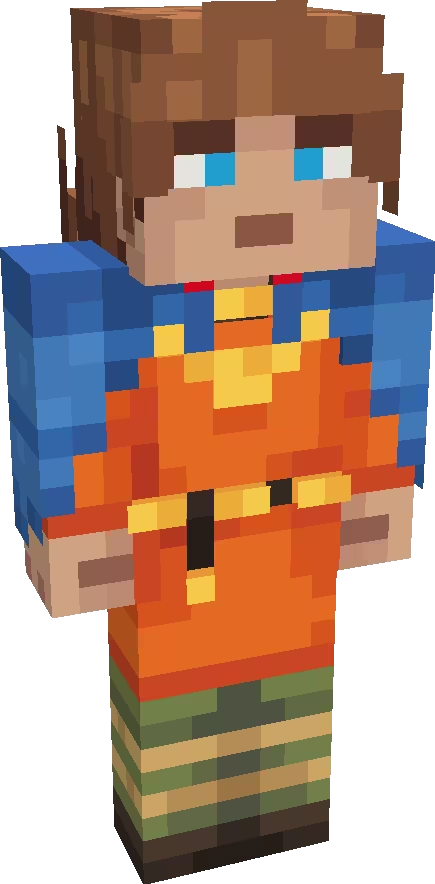
NPC: Farbror Sven
Materials to recreate the Great Hall
NPC: Håkan Aspeborg
Use the information below in order to make your own interpretation of what the building looked like, and what objects there were inside!
For example: Choose the building material that the people at Uppåkra might have used. Write down why you choose this material based on facts and educated guesses. This task often triggers questions. What we know so far (in 2026):
Roof bearing posts: In the bottom of the holes, they had put big stones to support the posts. We do not know what material the posts were made of, but oak is a sustainable material that might have been used. Roof: So far, there have not been any finds indicating what the roof was made of. But the roofs during the Iron Age in Scandinavia were usually made of straw, or reed.
Walls: Parts of the walls were found. They were made with so called wattle and daub technique, meaning that intertwined branches were covered with yellowish clay.
Floor: The floor was also made of yellowish, hardened clay. Finds: The finds inside the building shows that the people living in this house were rich, prominent people. It was the home of the leading family of Uppåkra! Many objects made of gold and silver such as brooches and coins have been found, as well as glass sherds that were once beautiful bowls and beakers. They have also uses bowls and beakers made of ceramics.
What did they put on their table? Finds of tons of animal bones, waste from what seems to have been big feasts, have been made. They ate for example veal, pork, lamb, fish (herring and cod) and meat from horse. They probably drank beer, brewed by the big ovens found at Uppåkra. The also ate cale, turnip and carrot, and used dill and parsley. These were plats that had been imported from the roman empire and were very luxurious at the time.
Charred grains: The charred grains of barley from this building shows that the people stored big jars of grain inside the building. Perhaps it was the food supplies for the winter?
Bear claws: On the floor of the building bear claws have been found. This might be what’s left of a bear fur that once was spread on the floor.
For example: Choose the building material that the people at Uppåkra might have used. Write down why you choose this material based on facts and educated guesses. This task often triggers questions. What we know so far (in 2026):
Roof bearing posts: In the bottom of the holes, they had put big stones to support the posts. We do not know what material the posts were made of, but oak is a sustainable material that might have been used. Roof: So far, there have not been any finds indicating what the roof was made of. But the roofs during the Iron Age in Scandinavia were usually made of straw, or reed.
Walls: Parts of the walls were found. They were made with so called wattle and daub technique, meaning that intertwined branches were covered with yellowish clay.
Floor: The floor was also made of yellowish, hardened clay. Finds: The finds inside the building shows that the people living in this house were rich, prominent people. It was the home of the leading family of Uppåkra! Many objects made of gold and silver such as brooches and coins have been found, as well as glass sherds that were once beautiful bowls and beakers. They have also uses bowls and beakers made of ceramics.
What did they put on their table? Finds of tons of animal bones, waste from what seems to have been big feasts, have been made. They ate for example veal, pork, lamb, fish (herring and cod) and meat from horse. They probably drank beer, brewed by the big ovens found at Uppåkra. The also ate cale, turnip and carrot, and used dill and parsley. These were plats that had been imported from the roman empire and were very luxurious at the time.
Charred grains: The charred grains of barley from this building shows that the people stored big jars of grain inside the building. Perhaps it was the food supplies for the winter?
Bear claws: On the floor of the building bear claws have been found. This might be what’s left of a bear fur that once was spread on the floor.
The game structure
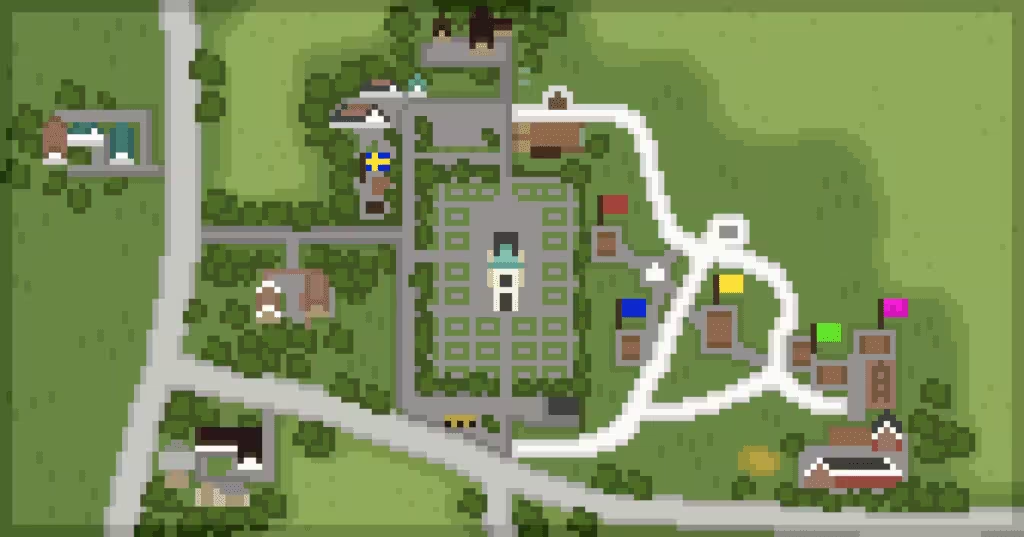
The only part of the game that cannot be skipped is the introduction/Lesson 1, The Tooth Mystery at the Yellow and Blue Flag. (the picture with the map and the flags needs to be here).
It guides you through the first steps of the game.
After completing each mission, you receive a personal certificate, which shows the learning objectives and skills you gained by completing the mission. Here’s how the game works:
Talk to the researchers and archeologists
Dig up finds Do a time travel and do missions
Report your finds
Learn more about Uppåkra, history and science
To start a particular quest, you need to dig up the right item. So there can be several finds in the same shaft, but only some that send you on a time trip. you will find an overview of all the excavation sites, and where you can find the right finds to start the missions. Most of the finds that the students find are real finds that have been found in the same place in the Uppåkra of reality.
It guides you through the first steps of the game.
After completing each mission, you receive a personal certificate, which shows the learning objectives and skills you gained by completing the mission. Here’s how the game works:
Talk to the researchers and archeologists
Dig up finds Do a time travel and do missions
Report your finds
Learn more about Uppåkra, history and science
To start a particular quest, you need to dig up the right item. So there can be several finds in the same shaft, but only some that send you on a time trip. you will find an overview of all the excavation sites, and where you can find the right finds to start the missions. Most of the finds that the students find are real finds that have been found in the same place in the Uppåkra of reality.
The Raven Munin
In the Minecraft world a black raven called Munin follows you around. You can talk to Munin during quests and he will give you tips or let you cancel the quest and go back to the present. (Did you know that adding the crow in the game was an idea of one of the students involved in one of the classroom sessions when we created Time travel at Uppåkra world) The map is really big. There are bikes you can take to go from one point to another. Just click on a bike to get on and press Shift or Space to jump off the bike.
Commands
These are a few commands in general. There is more advice on how to manage each quest in the Teachers guide.
If you get stuck:
Press T to open a chat window. Type /function travel/next to get unstuck
Need to travel back to present time Uppåkra?
Talk to the crow Munin and follow his instructions.
On foot W = forward
S = Backwards
A = Strafe left
D = Strafe right Control (CTRL) or double tab
W = sprint
Left mouse button Without item = Swing arm / attack / destroy
Left mouse button With item = Swing item (to dig) / attack / destroy
Right mouse button = Talk to people
Right mouse button = Get on bike
Right mouse button = interact with objects (display with items)
Right mouse button = Place block
Right mouse button = Get on bike
Space = Jump
Q = Drop item
E = Open inventory
1-9 or scroll on mouse = select item in hotbar
Need to travel back to present time Uppåkra?
Talk to the crow Munin and follow his instructions.
On foot W = forward
S = Backwards
A = Strafe left
D = Strafe right Control (CTRL) or double tab
W = sprint
Left mouse button Without item = Swing arm / attack / destroy
Left mouse button With item = Swing item (to dig) / attack / destroy
Right mouse button = Talk to people
Right mouse button = Get on bike
Right mouse button = interact with objects (display with items)
Right mouse button = Place block
Right mouse button = Get on bike
Space = Jump
Q = Drop item
E = Open inventory
1-9 or scroll on mouse = select item in hotbar
On Bike:
W = forward
S = Backwards
A = Strafe left
D = Strafe right
Space or shift = Get off bike
S = Backwards
A = Strafe left
D = Strafe right
Space or shift = Get off bike